
Research Only Use:
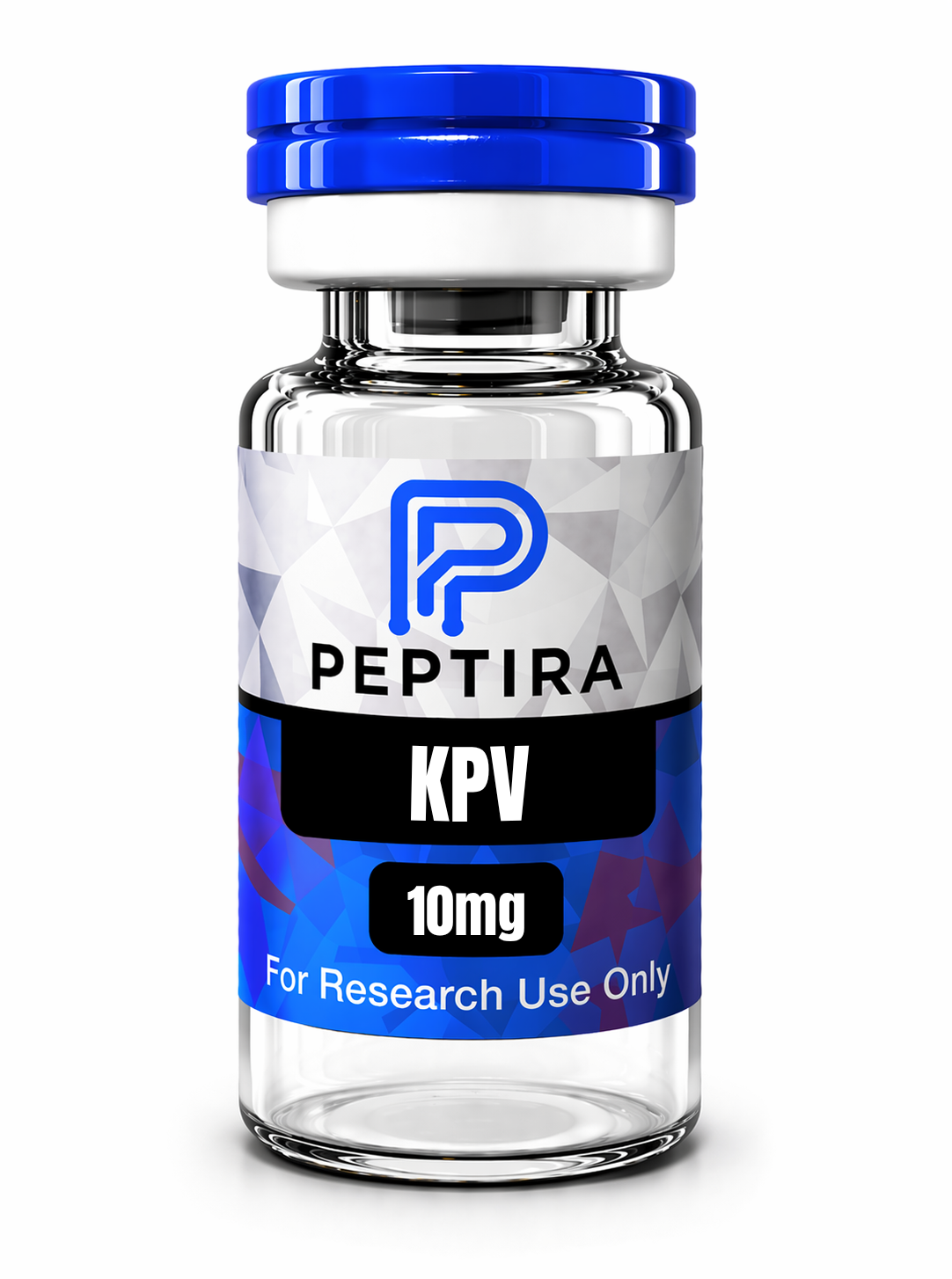
Kpv Peptide is sold strictly for in vitro laboratory research use only. It is not intended for human consumption, clinical use, or veterinary applications. No claims are made regarding safety or efficacy for therapeutic purposes.
KPV Peptide
Kpv Peptide is a synthetic tripeptide derived from the C-terminal region of alpha-melanocyte-stimulating hormone (α-MSH), a naturally occurring peptide involved in numerous biological signaling pathways. Although KPV consists of only three amino acids, it has attracted considerable scientific interest due to its potential role in inflammatory signaling, epithelial barrier function, and immune response modulation. As an investigational research peptide, KPV is widely studied in laboratory and preclinical settings to better understand the molecular mechanisms involved in tissue homeostasis, cellular communication, and inflammatory biology.
Researchers investigate KPV Peptide for its interactions with pathways associated with cytokine signaling and innate immune responses. Experimental studies have explored its potential influence on inflammatory mediators, including nuclear factor-kappa B (NF-κB) signaling, as well as other molecular pathways involved in maintaining cellular balance. These investigations have made KPV a valuable research tool for scientists studying immune regulation and the complex biological processes that govern inflammatory responses.
KPV Peptide has also become an area of interest in gastrointestinal research due to its potential relationship with epithelial barrier integrity and intestinal physiology. Laboratory investigations examine how the peptide may influence cellular responses within the gastrointestinal tract, making it a useful model for studying epithelial function, tissue maintenance, and mucosal biology. Additional research explores its role in skin biology, wound repair models, and other tissues where inflammatory signaling and cellular regeneration are actively investigated.
Scientific studies continue to evaluate KPV in research involving oxidative stress, cellular signaling, and tissue regeneration. Investigators are examining how this tripeptide may interact with biological pathways that regulate cellular communication, extracellular matrix organization, and physiological responses to environmental stress. While preclinical findings continue to expand scientific understanding of KPV, ongoing research is necessary to further characterize its biological activity and potential applications within experimental models.
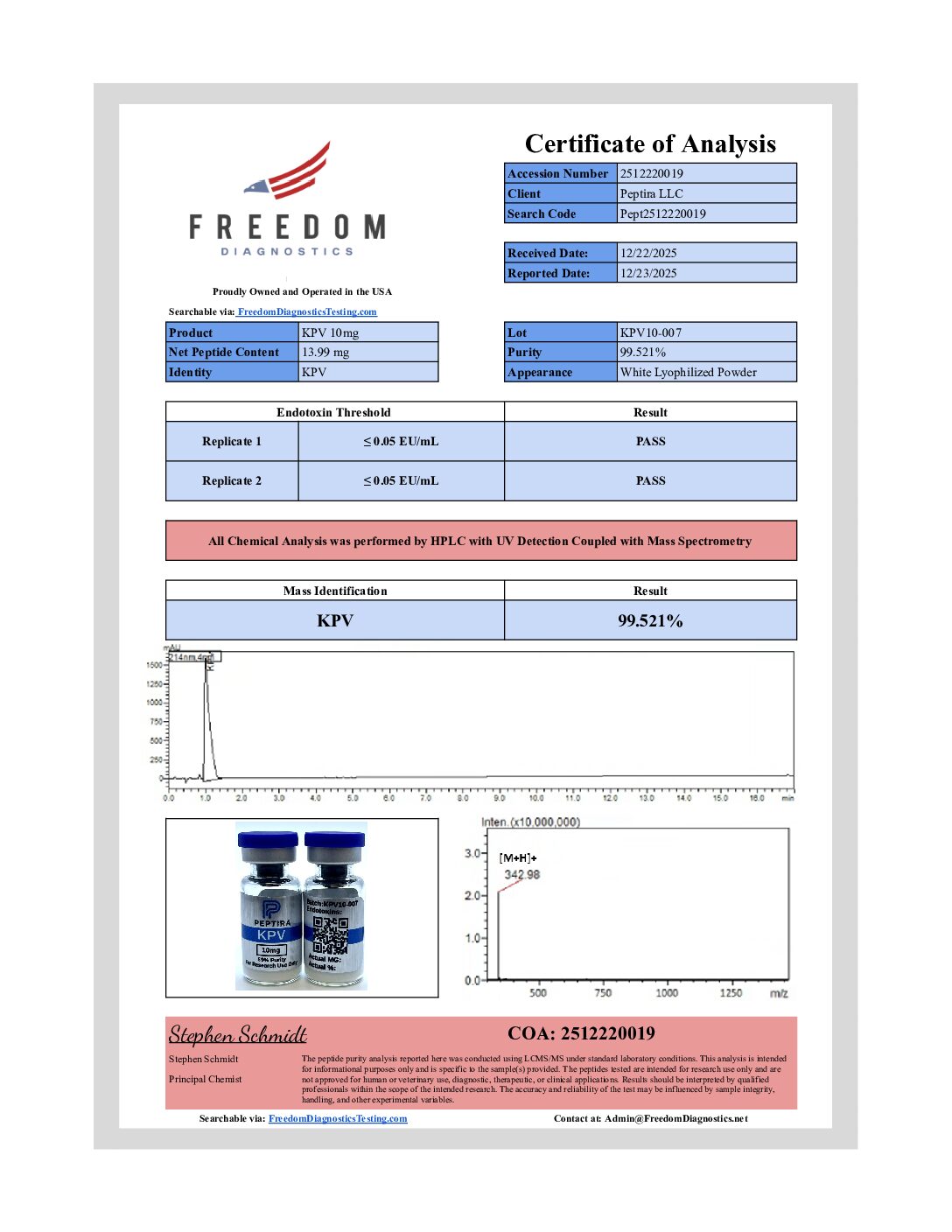
Manufactured using advanced peptide synthesis technology, KPV is produced under stringent quality control standards to ensure exceptional purity, identity, and batch-to-batch consistency. Every production lot undergoes comprehensive analytical testing to verify peptide composition and quality, supporting reliable laboratory performance and reproducible scientific results. These manufacturing practices make KPV suitable for controlled research environments where precision and consistency are essential.
Supplied as a lyophilized peptide, KPV offers excellent stability when handled and stored according to accepted laboratory protocols. Researchers should reconstitute and maintain the peptide using standard laboratory procedures to preserve structural integrity and ensure dependable performance throughout scientific investigations.
Product Features
- High-purity synthetic tripeptide
- Derived from the C-terminal region of α-MSH
- Manufactured using advanced peptide synthesis technology
- Produced under stringent quality control standards
- Batch tested for purity, identity, and consistency
- Supplied as a lyophilized research peptide
- Designed exclusively for laboratory and scientific research
Research Applications
KPV is commonly investigated in studies involving:
- Inflammatory signaling pathways
- Immune system biology
- Cytokine regulation
- NF-κB pathway research
- Gastrointestinal physiology
- Epithelial barrier function
- Tissue regeneration models
- Skin biology
- Cellular signaling
- Oxidative stress mechanisms
- Mucosal biology
- Regenerative medicine research
Storage
Store the lyophilized peptide refrigerated at 2°C–8°C for short-term storage or frozen for extended preservation in accordance with standard laboratory practices. Protect the product from moisture, repeated freeze-thaw cycles, excessive heat, and direct light to maintain peptide stability and product integrity.
Important Notice
KPV is supplied strictly for laboratory research purposes only. It is not intended for human consumption, veterinary use, therapeutic applications, or diagnostic purposes. This product has not been evaluated or approved by regulatory authorities for the diagnosis, treatment, cure, or prevention of any disease. It should be handled only by qualified professionals in appropriate research facilities while following all applicable laboratory safety procedures and regulatory requirements.
3 reviews for kpv peptide
Add a review
Related products
Peptides
Peptides
Peptides
Peptide Blends
Peptides
Peptides
Peptides
Kenji Sato –
“Consistency is everything in this industry, and this brand delivers it with every single order. Completely dependable.”
Priya Patel –
”Exceeded expectations across the board. The customer care is fantastic and the product is absolute top-tier.”
Silas Blackwood –
“Securely packaged, clearly labeled, and shipped out immediately. I couldn’t ask for a more professional transaction.”